Blog Details
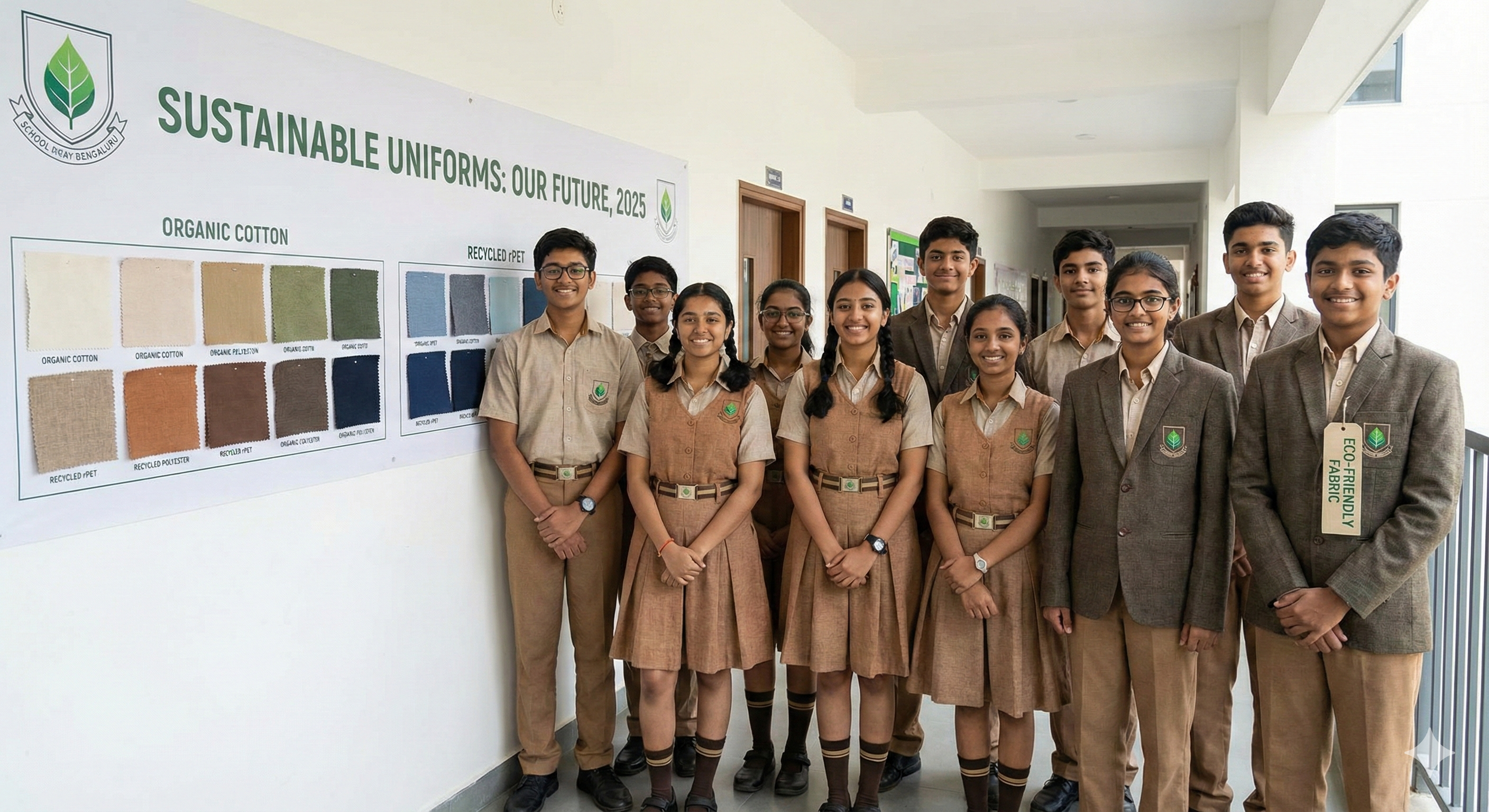
Sustainable School Uniforms in India — How 2025 Is Changing the Market
Sustainability is no longer a Western trend—India’s school uniform ecosystem is undergoing a major shift toward eco-conscious fabrics and ethical production. With over 25 crore school-going students, uniforms are one of the largest textile segments in the country. As environmental awareness increases among parents and schools, 2025 has already seen a significant demand for organic cotton, recycled polyester blends, natural dyes, and durable fabrics that reduce yearly replacement costs.
-
Schools Are Actively Asking for Eco-Friendly Options
CBSE and ICSE schools in metro cities—especially Bengaluru, Pune, Mumbai, and Delhi—are shifting toward materials that are:
- Breathable
- Skin-friendly
- Low-maintenance
- Chemical-free
Parents now ask uniform vendors whether fabrics contain harmful dyes or microplastics.
-
Rise of Recycled Polyester (rPET) Uniforms
Indian textile mills are producing rPET yarn from recycled bottles, turning waste into uniforms. This is now seen in:
- Sportswear
- House T-shirts
- Winterwear
It lowers fabric cost without compromising comfort.
-
Durability = Sustainability
Schools have realized that sustainable doesn’t mean expensive. Long-lasting fabric reduces annual uniform purchases, actually saving money for parents.
-
Government Push Toward Green Textiles
Schemes like PM MITRA are helping mills expand sustainable production, making eco-friendly uniforms more accessible. 5. 2025 Outlook
Expect a wider availability of :
- Bamboo blends
- Herbal-dyed fabrics
- Wrinkle-free organic cotton
- Recycled sportswear
Sustainability is no longer optional—it’s the new expectation.